


About the Project:
Project Team
Meet the researchers working on Box Office Bears and find out more about their interests.

Sophy Charlton
- Postdoctoral Research Fellow
- University of Oxford
Dr Sophy Charlton is a biomolecular archaeologist whose research focuses on utilising scientific techniques to determine information about past human and animal lifeways. Sophy has an interest in the relationships between humans and animals within the archaeological past, and in using evolutionary genetics to explore changes in past populations. She is also interested in determining how subsistence strategies, population movement and health and disease states may have altered through time and with socio-cultural, climatic or environmental transitions. Her research utilises ancient DNA analysis, proteomics and stable isotope analysis, and has predominately been focused on European populations. Broadly, she is interested in how we can utilise biomolecular archaeology to address large-scale and long-standing questions within the archaeological past.

Callan Davies
- Former Research Fellow
- University of Southampton
Dr Callan Davies works across early modern literary, cultural, and theatre history; he’s Lecturer in Seventeenth-Century Literature and Culture at the University of Southampton. His previous book, What is a Playhouse? England at Play, 1520-1620, is an accessible account of the playhouse across early modern England (2023). He is a winner of the Philip Leverhulme Prize 2025; the funding award will support his future research and writing on the Curtain and a popular history due out 2027 with Yale, The Curtain: The Story of a Shakespearean Playhouse. He’s part of the Box Office Bears project (researching animal sports in early modern England) (on which he was formerly Research Fellow at Roehampton), as well as the Middling Culture team examining early modern status, creativity, writing, and material culture, and the Before Shakespeare team. He is the Editor of the Curtain playhouse records for Records of Early English Drama’s Records of Early English Drama REED London Online. His first monograph, Strangeness in Jacobean Drama (2021), was shortlisted for the Shakespeare’s Globe Book Award (2023). His article on bowling alleys and playhouses in sixteenth century London for Early Theatre won the MRDS Barbara Palmer Award 2020, and he has pieces recently released or forthcoming on middling community and Bristol’s Wine Street playhouse for English Historical Review; prose and playing for The Oxford Handbook of Thomas Nashe; a recently-published collection on early modern ephemera with Hannah Lilley and Catherine Richardson; and the introduction for the new Oxford World’s Classics The Merry Wives of Windsor.

Andy Kesson
- Co-Investigator
- University of Roehampton
Dr Andy Kesson is a Reader in Renaissance Literature at the University of Roehampton, the author of John Lyly and Early Modern Authorship, the co-editor, with Emma Smith, of The Elizabethan Top Ten: Defining Print Popularity in Early Modern England, and the editor of the Shakespeare Studies 45 (2017) special issue on 1580s drama. He was the principal investigator for Before Shakespeare, and is currently working with the theatremaker Emma Frankland on a diversity-positive production of John Lyly’s Galatea. He also runs A Bit Lit, a public forum celebrating research and creativity of all kinds.
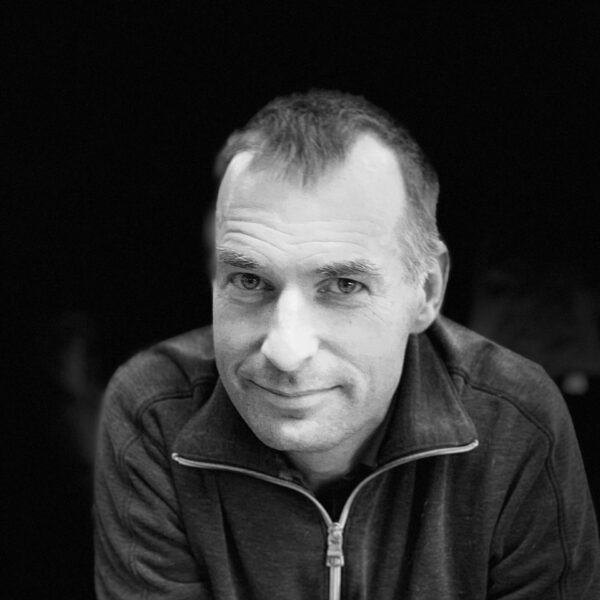
Greger Larson
- Co-Investigator
- University of Oxford
Prof. Greger Larson received his bachelor’s degree in 1996 from Claremont McKenna College, a small liberal arts college in California. He read just about everything Stephen J Gould ever wrote over the following three years while he wandered the deserts of Turkmenistan and worked for an environmental consultancy in Azerbaijan. Deciding that evolution was cooler than oil, Greger studied at Oxford and the University of Colorado before receiving his PhD in Zoology in 2006. He then spent two years in Uppsala, Sweden on an EMBO postdoctoral fellowship before starting a job in the department of archaeology at Durham University. Greger then moved to Oxford University where he is the Director of the Palaeogenomics & Bio-Archaeology Research Network which continues to focus on the use of ancient DNA to study the pattern and process human animal interactions. He rarely wonders what his salary would be had he stuck to oil.

Liam Lewis
- Postdoctoral Research Fellow
- University of Nottingham
Dr Liam Lewis is a literary historian and critical theorist at the University of Nottingham whose research focuses on medieval and early modern representations of ecologies and environments. He is the author of Animal Soundscapes in Anglo-Norman Texts (2022), an in-depth study of animal noises in medieval literature written in English and French. Liam has published in journals such as Interdisciplinary Studies in Literature and Environment and Exemplaria, in which he writes about pre-modern concepts of animal noise and translation, and the role of Animal Studies in continental philosophy. He will be thinking about how sensory experiences informed portrayals of bear fighting, and the European contexts for this phenomenon. Liam has taught at the Sorbonne-Nouvelle in Paris and the University of Oxford, and he was Lecturer in French at the University of Liverpool from 2019-2022.

Hannah O’Regan
- Principal Investigator
- University of Nottingham
Prof. Hannah O’Regan is an archaeologist at the University of Nottingham, UK. Her undergraduate degree was in Archaeology at the University of Bradford, and her PhD is in Quaternary Palaeontology from Liverpool John Moores University. Hannah has always had a very wide range of research interests, and Box Office Bears allows her to explore them in full! She has excavated on sites in the UK, Israel and South Africa, and her main areas of research have been osteology (bones), large carnivores and cave archaeology, with a side order of zoo history. All of these feed into BOB, as bears sometimes den in caves, and have been kept in menageries for centuries, as well as being used in entertainments such as baiting and dancing.
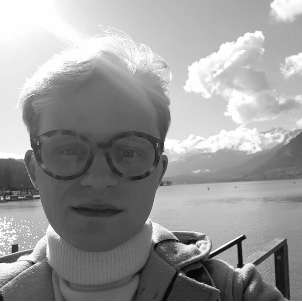
Harvey Shepherd
- Doctoral Student on Placement
- Courtauld Institute of Art
Harvey Shepherd is a CHASE-funded PhD student and associate lecturer at The Courtauld Institute of Art, researching the interrelated conception and depiction of ‘regional culture’ in late-seventeenth and eighteenth century France. His PhD thesis seeks to understand ways in which a centralised notion of French identity during the reigns of both Louis XIV and his successor Louis XV was expanded, complicated and informed through increasing interactions with France’s ‘regional’ cultures and people. The project examines five distinct areas: Brittany and the Atlantic West, Alsace, the Flemish North-East, the Alps, and finally Corsica and the Mediterranean South. Throughout, emphasis is placed on visual representation, interrogating the role played by images in the translation and conceptualisation of intra-cultural otherness and difference within the French kingdom as a whole in the Early Modern period. Harvey has also worked as an editor on the journal Immediations for their 2021 edition, and has organised events such as the Transporting Culture conference in association with the Historians of Eighteenth Century Art and Architecture (HECAA).
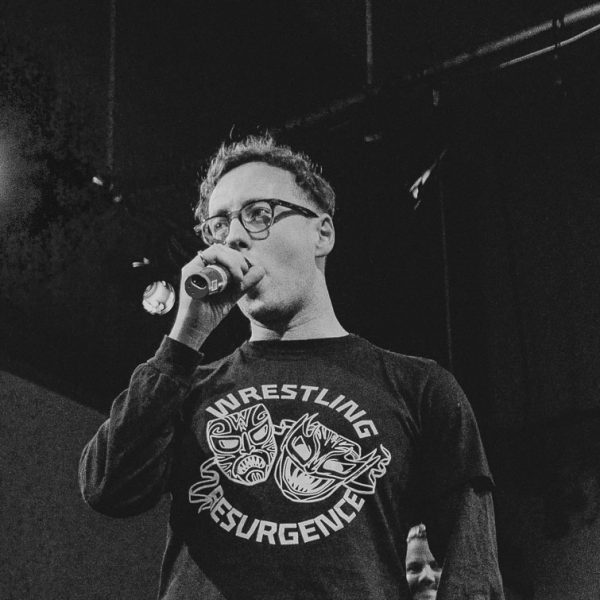
Sam West
- Research Fellow
- University of Roehampton
Sam West is a curator, professional wrestling promoter, and PhD student at Loughborough University. His PhD research explores professional wrestling as a storytelling art, and it is based on his first-hand experience of working in the UK independent wrestling industry. Outside of professional wrestling, his research interests are around performance studies and physical culture – which includes various forms of combat, but also sports like bodybuilding and weightlifting.
Sam is a co-founder of the acclaimed Wrestling Resurgence project. Wrestling Resurgence is an independent wrestling promotion based in the East Midlands set up by arts professionals and theatre scholars. Alongside live events, Wrestling Resurgence have initiated, facilitated, and contributed to several collaborative projects, securing funding from Being Human: Festival of Humanities Research, Arts Council England, Loughborough University, De Montford University, Leicester University, and the British Academy.
As well as professional wrestling, Sam has spent over a decade working in the arts and culture sector as a contemporary art curator and freelance creative producer specialising in performance art. Achivements include a five-year stint as curator at University of Leicester’s Attenborough Arts Centre, and four sucesfull Arts Council England grant awards.
Within Box Office Bears Sam is supporting the impact and public engagement aspect of the project.
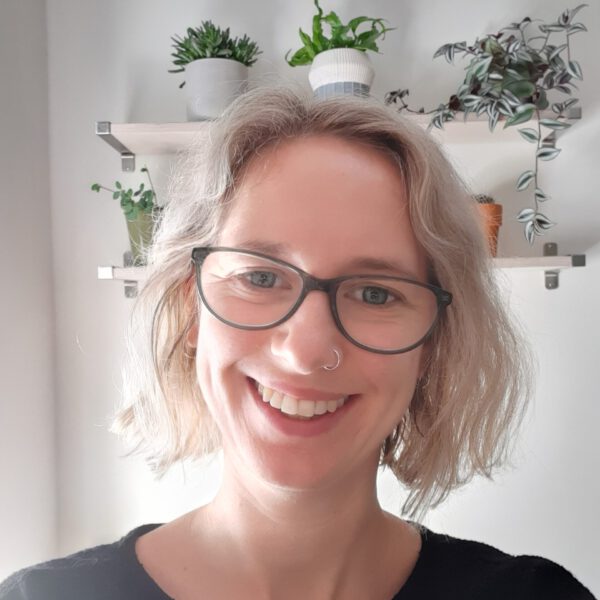
Lizzie Wright
- Postdoctoral Research Fellow
- University of Nottingham
Dr Lizzie Wright is a Zooarchaeologist – someone who studies animal remains (normally bones and teeth) excavated from archaeological sites. She has worked on remains from many different European time periods and geographical areas, and has a particular interest in the archaeology of human-cattle interactions. Her PhD explored focussed on the wild ancestor of modern domesticated cattle – the aurochs. She has previously been based at the University of Sheffield, was a Marie Skłodowska-Curie fellow at the University of Basel (Switzerland), and has also worked in developer funded archaeology.
Within Box Office Bears Lizzie is in charge of the zooarchaeology and isotopic parts of the project. She is studying animal bones from a number of bear-baiting sites on Bankside, in London, with the aim of finding out more about the animals that were involved in this activity. She hopes to answer questions such as: Which animals were they? What kind of injuries were they sustaining? How old were they when they died? and, Where did they come from?