What are you looking at?
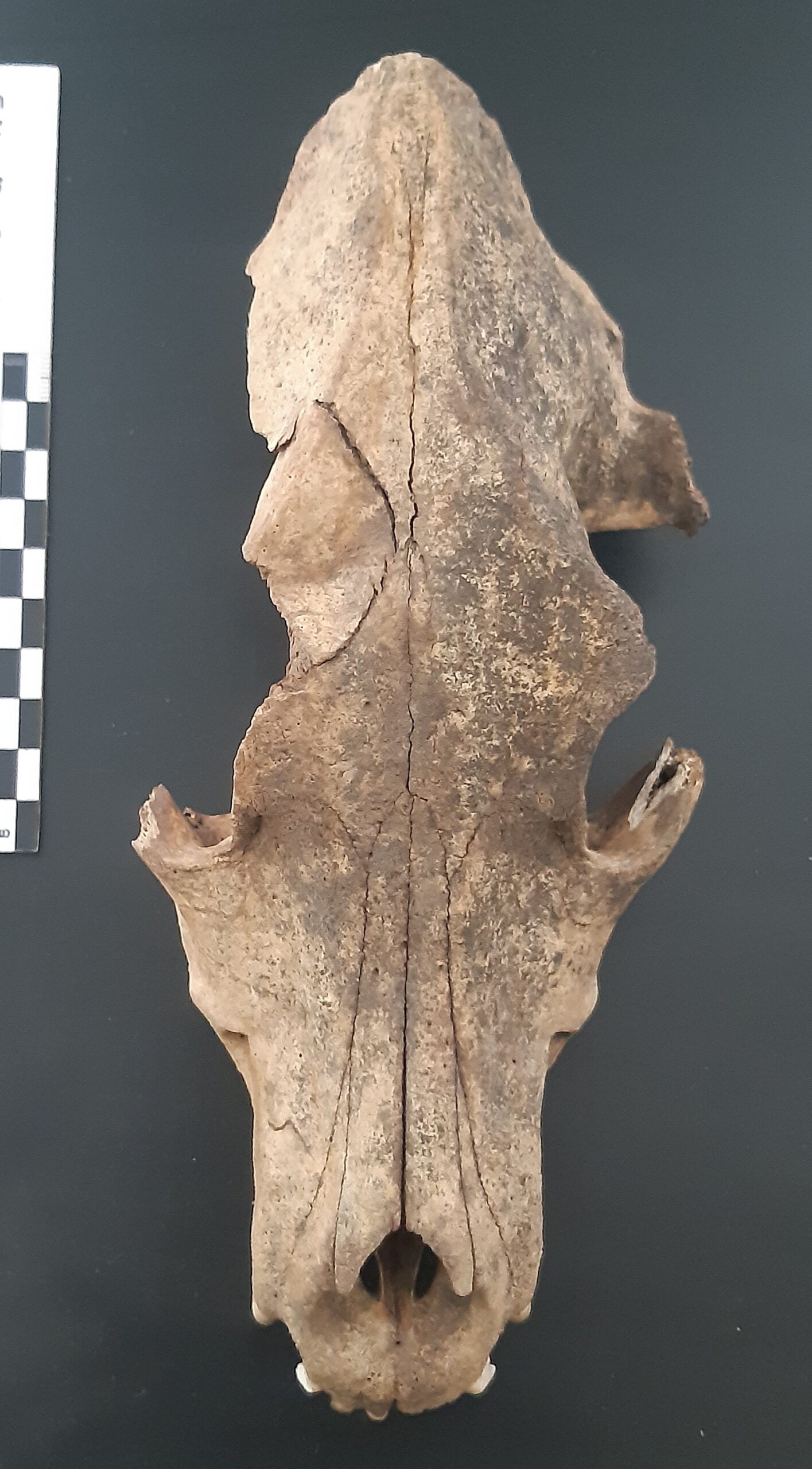
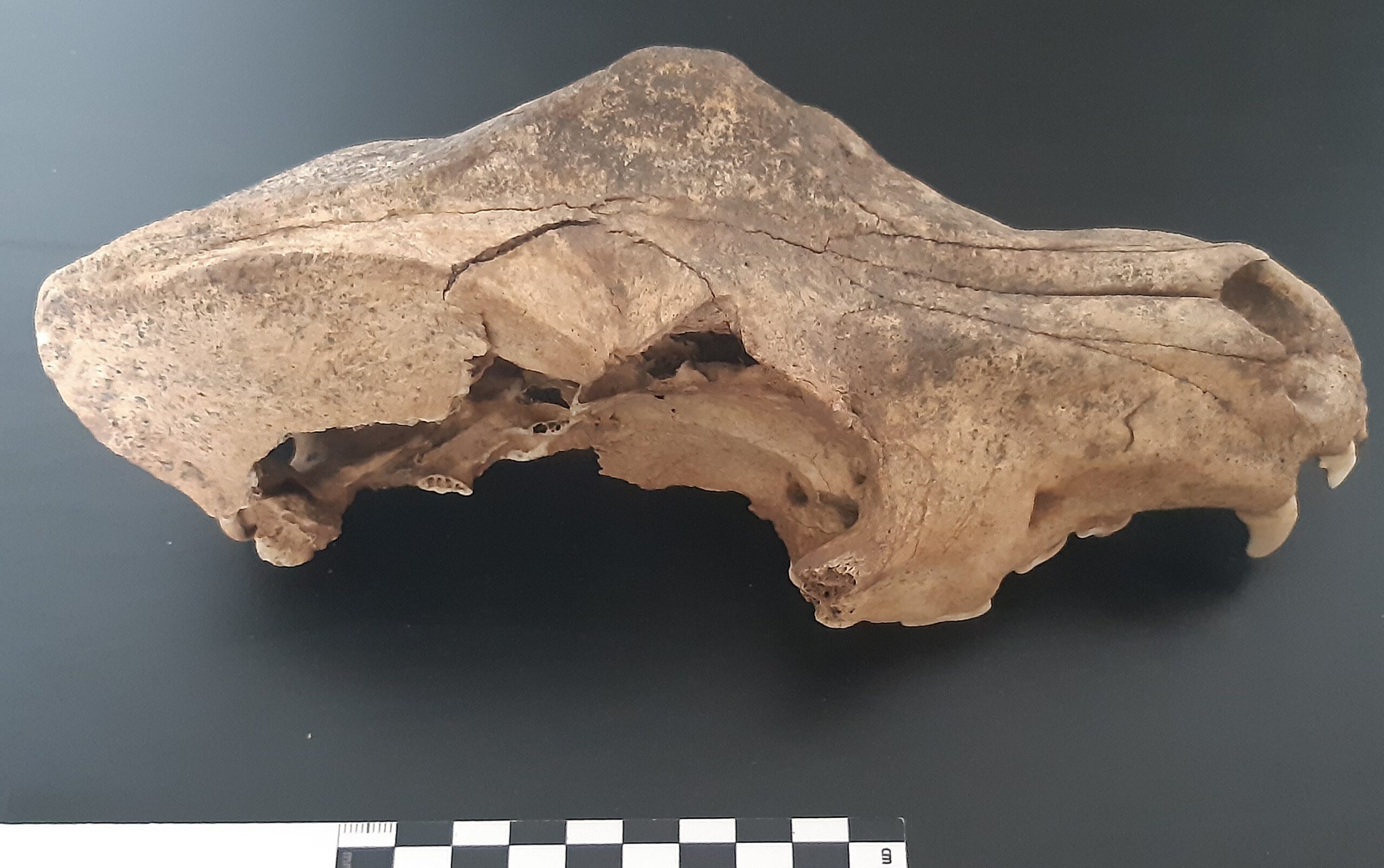
This is one of the dog crania (upper part of the skull) that was excavated during archaeological works on Bankside, in London. Several excavations have taken place in this area, revealing animal remains linked to baiting activity at the arenas that existed here during the 16th and 17th Centuries.
Why is it important?
This cranium contains the story of the life and death of this individual dog, which we can recover through zooarchaeological analysis. Firstly, it has its full set of adult teeth, and the tooth wear on the associated mandibles (lower jaw) indicate that it was probably between two and four years old when it died. Its size indicates that it was a large dog, but not as large as some of the dogs recovered from some of the other Bear Gardens on Bankside.
What does it tell us?
One of the most interesting things about this cranium is that it shows clear evidence of trauma. There is a clear dent in the braincase on its right side, which indicates that it took a blow to the head. The fact that there is no evidence of healing around it suggests that this is what caused its death.
Analysis of animal remains from sites on Bankside is ongoing, but evidence of trauma has also been seen on a number of the other dog remains studied so far, with re-healed rib fractures one of the more common examples. These injuries fit with the identification of these remains as dogs that were involved in blood sport. The size of the dogs also fits the narrative, as in archival documents they are often described as mastiffs.
According to the current information available, this individual also seems to give us a guide to the age at which these dogs were dying. Where tooth wear information is available, most fit into this two-four year age range for age at death, although it does also look like some individuals were surviving beyond four years. Further study of more material will show if these patterns continue to play out.
Where does it come from?
This particular find comes from excavations at the site of the Davies’ Bear Garden, which was in use between 1660 and 1680. This was the last of the baiting arenas to have been in use in the area, and archaeological evidence from this site provides us with information about how bear baiting may have been performed after the English Civil War (1642-1651).