What are you looking at?
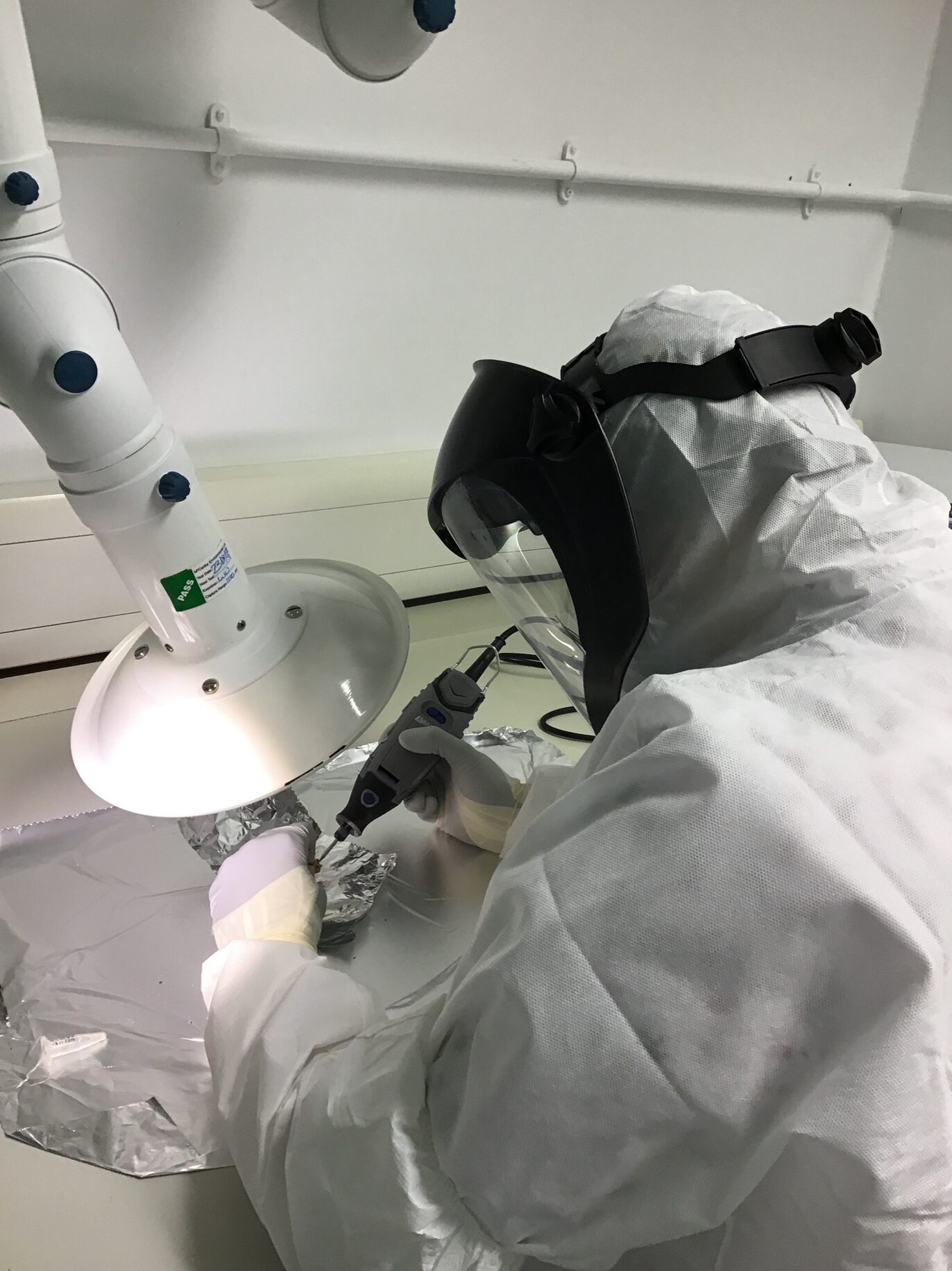
This image shows us sampling skeletal material for ancient DNA (aDNA) analysis, at the PalaeoBARN Laboratory at the University of Oxford. Sampling requires a small powdered bone or tooth sample to be taken from each individual, using a rotary dental drill at low speed. We always try to make sure the sampling is undertaken on an unobtrusive part of the specimen, and any diagnostic features are avoided. When material is provided by a museum, we will discuss a suitable sampling location with the curator. Where possible however, we normally aim to sample either tooth roots or petrous (pars petrosa) bones, as these elements are known to provide the best aDNA preservation within the skeleton.
Why is it important?
Part of the ‘Box Office Bears’ Project research includes ancient DNA (aDNA) analysis of the animals involved in the baiting themselves – namely bears and dogs. Ancient DNA can be found within archaeological bones and teeth, and is one of a number of tools we can use to better understand past populations.
What does it tell us?
Ancient DNA can allow us to explore things such as genetic diversity, population structure, admixture and population movements in the past. Often, evidence of these may not be present in modern genomes – but when we start to look at genomes from archaeological samples, we can begin to build up a picture of past genetic change. Ancient DNA can also allow us to determine the genetic sex of animals utilised within baiting.
Where does it come from?
In order to avoid introducing modern DNA and contaminants into our samples, the sampling of skeletal material for aDNA analysis has to be undertaken in a clean lab. At the University of Oxford, we have the PalaeoBARN Laboratory, which is a dedicated ancient DNA clean lab – and this is where we undertake our sampling and our laboratory protocols.
You will see from the photograph that working within the clean lab means we have to wear protective clothing to avoid introducing modern DNA to our samples. This clothing includes overalls, surgical masks, hairnets, face visors, dedicated lab footwear, and two pairs of surgical gloves. We also have to ensure that chemical cleaning procedures are undertaken regularly on all laboratory surfaces and equipment.